
Engrossed vs Enrolled Bill: What Each Means and How They Differ
An engrossed bill is the official copy passed by one chamber. An enrolled bill is the final copy passed by both and sent for signature. Here is how they differ.
12 minute read15 sources
In this article
- What is an engrossed bill?
- What is an enrolled bill?
- Engrossed vs enrolled bill: what is the difference?
- What happens after a bill is enrolled?
- What is the enrolled bill rule?
- Engrossed and enrolled bills in Florida and other states
- How to tell which version of a bill you are reading
- Why the version matters before a meeting
- Save this guide
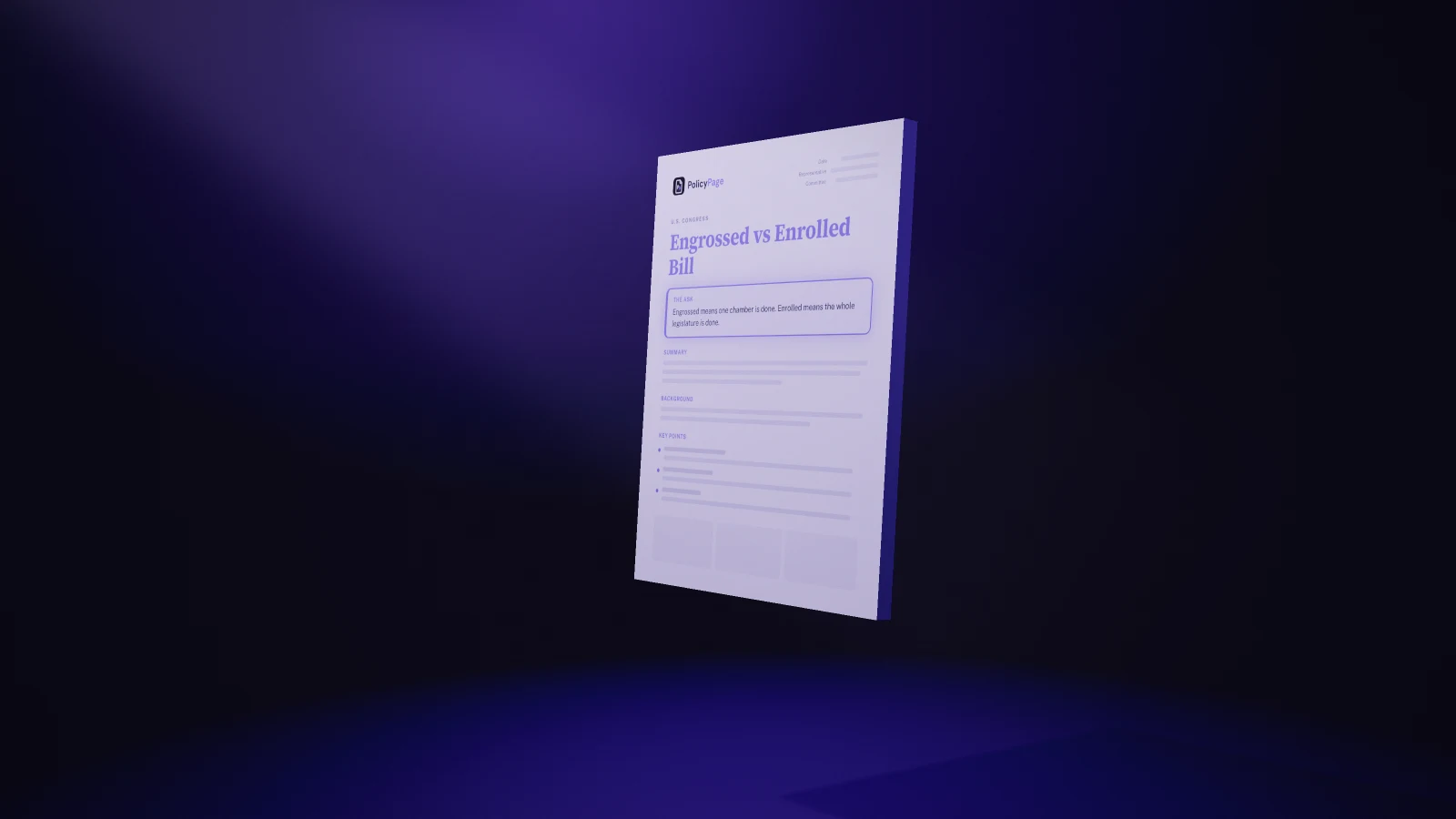
An engrossed bill is the official copy of a bill as one chamber of a legislature passed it, with every amendment that chamber adopted worked into the text. An enrolled bill is the final copy that both chambers passed in identical form, signed by their leaders and sent to the President or governor to sign or veto. In short, engrossed means one chamber is done. Enrolled means the whole legislature is done. The two words name the bill at two different stops on its trip to becoming law.
What is an engrossed bill?
An engrossed bill is a clean, official copy of a bill as it passed the first chamber. The Congressional Research Service (CRS), which writes nonpartisan reports for Congress, describes engrossment as the formal reprinting of the bill in the form the chamber will vote on for final passage.
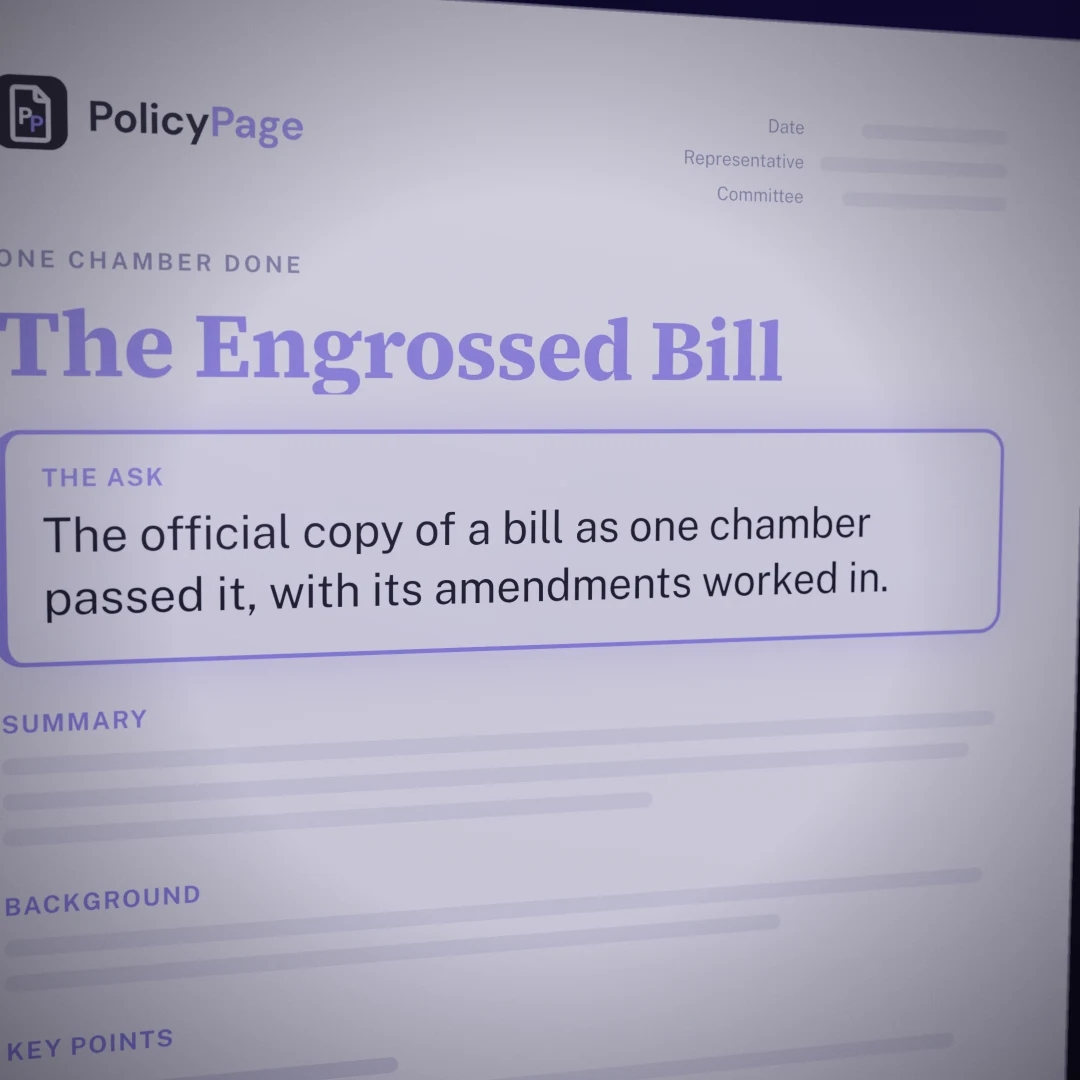
Here is why that step is needed. While a bill is on the floor, members can offer amendments. Some pass, some fail. By the end, the working copy can look like a marked up school essay, with lines crossed out and new paragraphs pasted in. Engrossment is the step where clerks produce one tidy copy that shows exactly what the chamber agreed to. Think of it as the final, retyped draft after all the red ink.
In Congress, staff in the Office of the Clerk of the House and the Office of the Secretary of the Senate prepare the engrossed copy. Federal law says the printed copy shall be called the engrossed bill and must be signed by the Clerk of the House or the Secretary of the Senate. That signature is the chamber's way of saying, "This is the text we passed."
CRS adds a small but useful detail: House engrossed bills are printed on blue paper, and Senate engrossed bills on white paper. The engrossed bill is then "messaged," or formally sent, to the other chamber. That is the version the second chamber works from.
The Senate's own glossary defines an engrossed bill as the official copy of a bill or joint resolution passed and certified by one chamber. The engrossed bill entry in our glossary gives the same idea in one sentence.
What does engrossed mean?
In everyday English, "engrossed" means deeply absorbed, as in "engrossed in a book." That is why searches for "what does engrossed mean" and "engrossed legislation meaning" can turn up confusing results. In a legislature, the word has a narrow, technical meaning: the official copy of a bill with the passing chamber's amendments included. When you see "engrossed" on a bill, read it as "passed by one chamber, with its changes."
What happens if a bill is engrossed?
Being engrossed is a good sign for a bill, but it is only halfway. The bill still has to pass the other chamber. If the second chamber changes it, the two chambers have to settle their differences before the bill can move on. Many bills are engrossed and then stall in the second chamber. An engrossed bill is not a law and may never become one.
What is an enrolled bill?
An enrolled bill is the final version of a bill that both chambers have agreed to, word for word. CRS describes it as the final version of a measure agreed to by both chambers, printed on parchment or paper. It is the copy that goes to the President's desk.
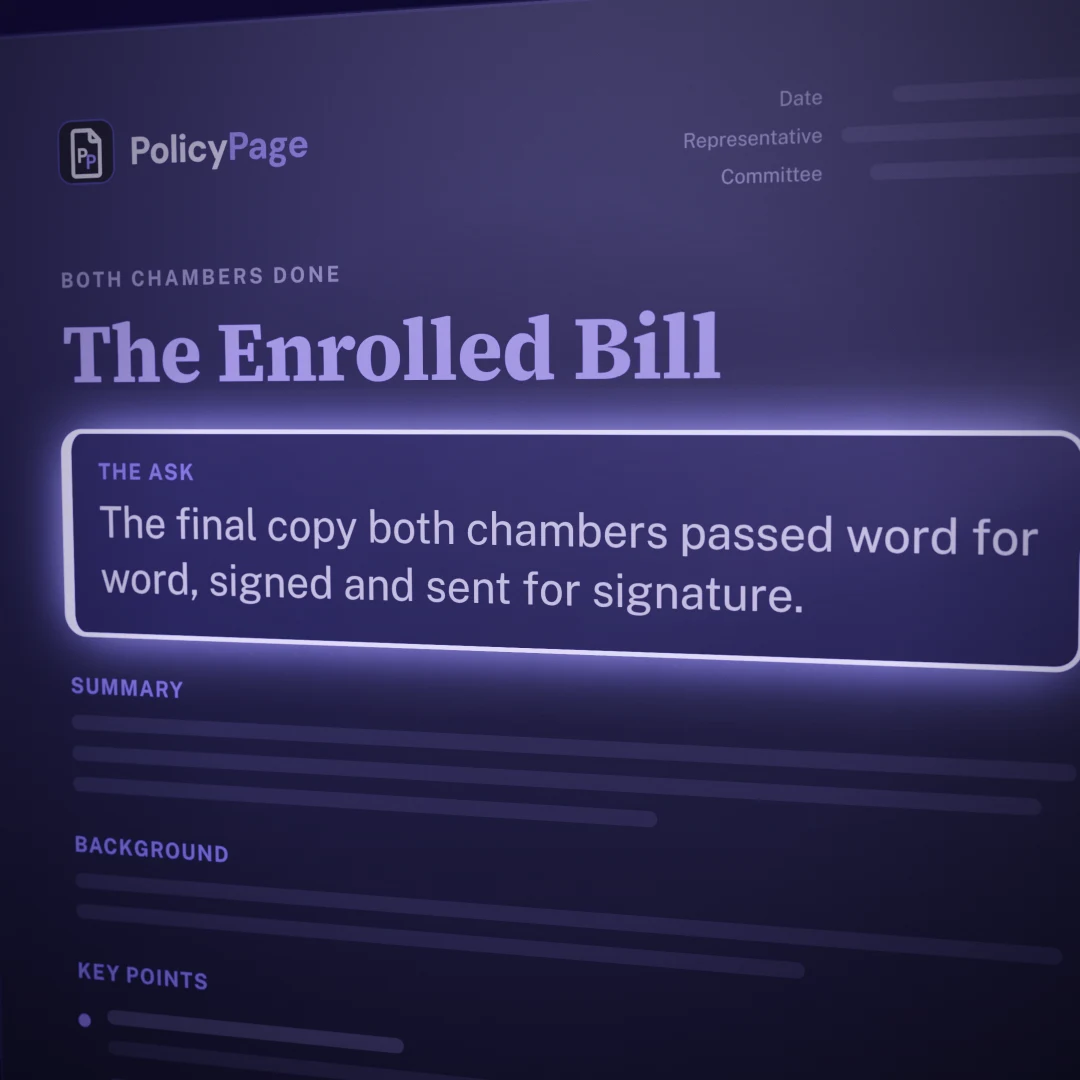
Federal law spells out the step. When a bill has passed both Houses, it shall then be called the enrolled bill, must be signed by the presiding officers of both Houses, and is sent to the President. The Senate glossary says the same thing in plain terms: an enrolled bill is the final copy that has passed both chambers in identical form, has been signed by the right Senate and House officials, and has been submitted to the President.
A few rules shape how enrollment works in Congress.
- The chamber where the bill started does the enrolling. CRS says enrollment happens in the chamber where the measure originated. Enrolling clerks do the work under the supervision of the House Clerk or the Secretary of the Senate.
- The clerk marks where it came from. CRS notes that the House Clerk signs the back of an enrolled measure to certify that it began in the House.
- The Speaker usually signs first. CRS says the Speaker of the House signs first, and then the Senate's presiding officer. The Speaker has been allowed to sign enrolled bills at any time since 1981 under House Rule I.
The enrolled bill is the moment when advocacy shifts. The legislature has finished its work. The only person left to act is the President or the governor.
Can an enrolled bill be fixed?
Yes, but it takes both chambers. If clerks find a mistake after enrollment, CRS explains that both chambers must agree to a concurrent resolution directing the right official to re-enroll the bill. If the presiding officers already signed it, the resolution cancels their signatures. If the bill already went to the President, the resolution asks the President to send it back. CRS counted six such concurrent resolutions in the 118th Congress. The re-done copy appears on GovInfo as a "Re-enrolled Bill."
Engrossed vs enrolled bill: what is the difference?
The simplest way to tell them apart is to ask how many chambers have finished with the bill. One chamber means engrossed. Both chambers means enrolled.
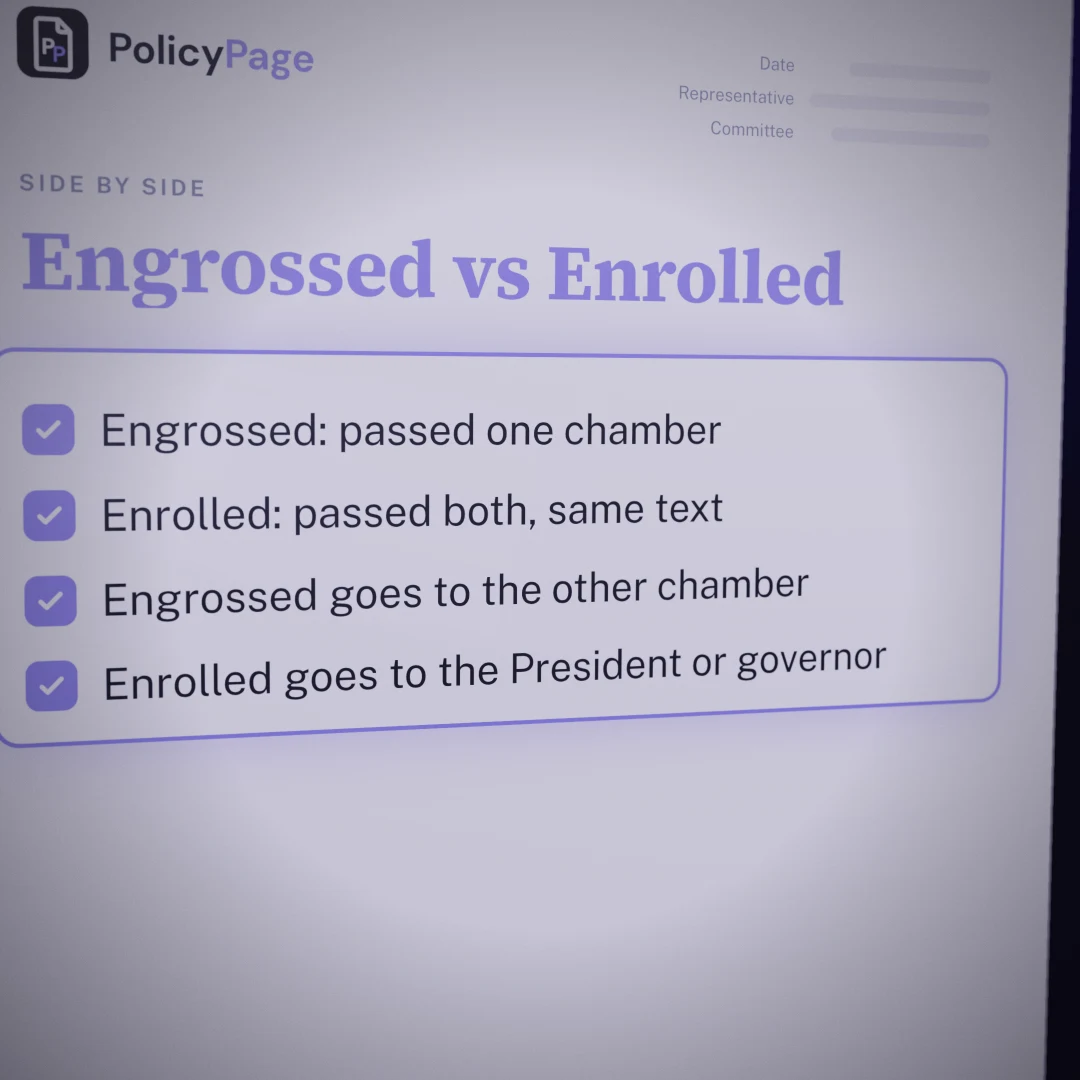
Here is a side by side look.
- Who passed it. An engrossed bill has passed one chamber. An enrolled bill has passed both chambers in the exact same form.
- Who signs it. In Congress, the engrossed bill is signed by the Clerk of the House or the Secretary of the Senate. The enrolled bill is signed by the presiding officers of both chambers, as 1 U.S.C. 106 requires.
- Where it goes next. The engrossed bill goes to the other chamber. The enrolled bill goes to the President or governor.
- Can it still change? An engrossed bill can still be amended by the second chamber. An enrolled bill is final unless both chambers agree to correct it.
- What it looks like. CRS says House engrossed bills are printed on blue paper and Senate engrossed bills on white paper. Enrolled bills are printed on parchment or paper.
Here is an analogy. Picture two roommates writing a lease together. One writes a draft, marks it up, and prints a clean copy to hand to the other. That clean copy is like the engrossed bill. The second roommate makes changes, they agree on every word, and both sign the final copy before giving it to the landlord. That signed final copy is like the enrolled bill.
A bill can also be engrossed more than once. If the second chamber amends a bill, its changes get engrossed too. GovInfo lists versions called Engrossed Amendment (House) and Engrossed Amendment (Senate) for exactly that situation. The two chambers may trade amended versions, or send the bill to a conference committee, until they agree on one text. Only then can the bill be enrolled.
What happens after a bill is enrolled?
Once both presiding officers sign, the enrolled bill is presented to the President. CRS says the Clerk of the House or the Secretary of the Senate delivers enrolled bills to the White House, stamped with the date and time. There is no specific deadline for presenting an enrolled bill, except at the end of a Congress.
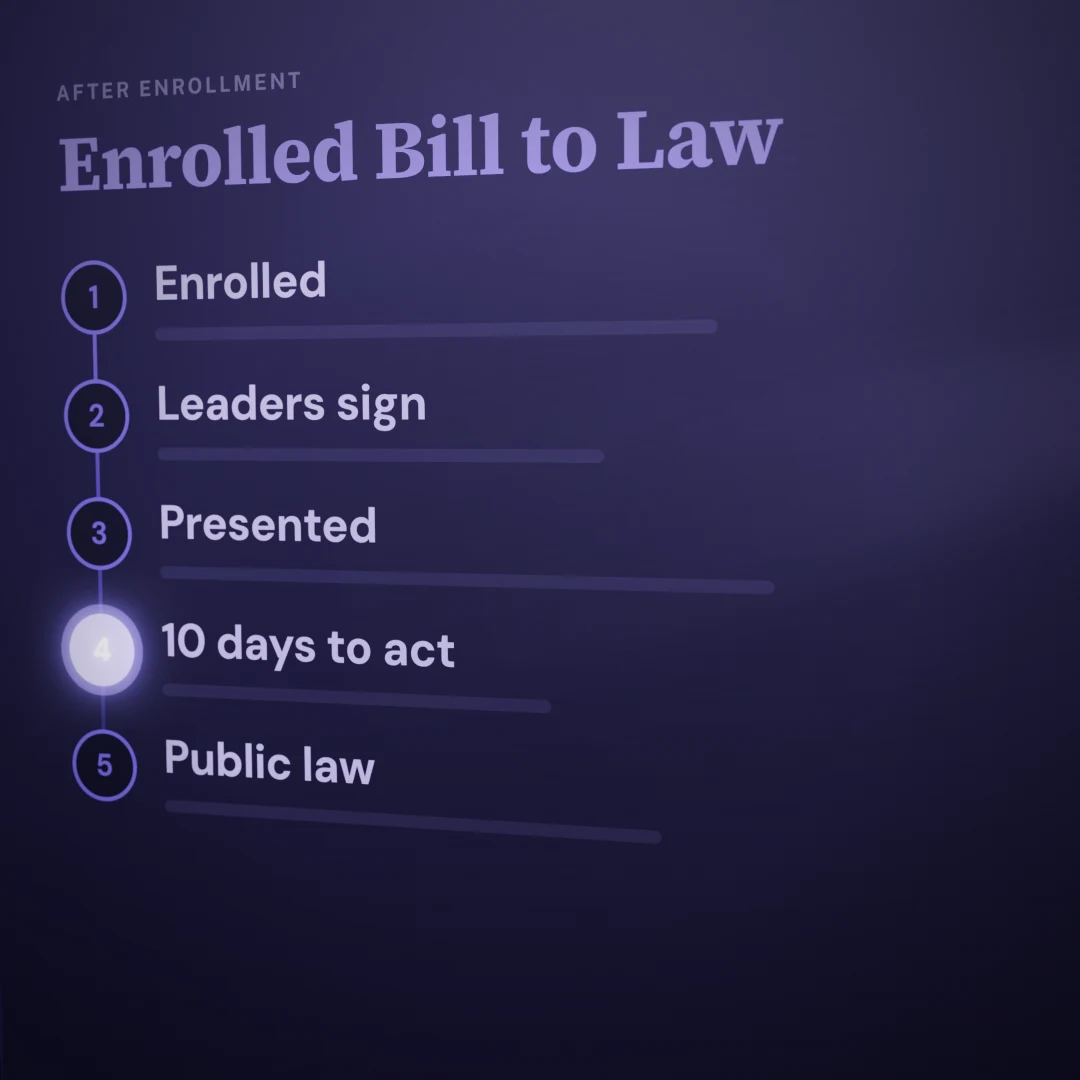
From there, the bill follows a few clear steps.
- The President has 10 days. The Constitution gives the President 10 days (excluding Sundays) to act on an enrolled bill.
- The President signs or vetoes. If the President signs within that window, the bill becomes law. A veto sends the bill back with the President's reasons. Congress can then try a veto override. Federal law describes an overridden bill as one approved by two-thirds of both Houses on reconsideration.
- Doing nothing has two outcomes. CRS explains that if the President does not act within 10 days, the bill becomes law unless Congress has adjourned. In that case it is a pocket veto.
- The law gets a number. The National Archives says that after the President signs a bill, it is delivered to the Office of the Federal Register, which assigns a Public Law number, prepares it as a slip law, and adds it to the next edition of the Statutes at Large.
The Senate glossary calls a slip law the first official publication of a law, usually out a few days after the law is enacted. Until it appears, the National Archives notes, you can read the new law by looking at the enrolled version of the bill. That is one more reason the enrolled bill matters: for a short time, it is the law's text.
Our guide on how a bill becomes law walks through the earlier steps, from introduction to the floor vote.
What is the enrolled bill rule?
If you search "enrolled bill," Google suggests "enrolled bill doctrine" and "enrolled bill rule." These phrases come from a Supreme Court case decided on February 29, 1892, Field v. Clark.
The question in the case was whether a court could look behind a signed law to check whether Congress really passed the exact text. The Court said the signatures of the Speaker and the President of the Senate are an official statement by both chambers that the bill passed Congress. Once the President approves it and it is deposited with the government, the Court said, its authentication is "complete and unimpeachable."
In plain English, the rule means courts generally treat the signed, enrolled copy as proof of what Congress passed. They do not usually dig into the record to see whether the House and Senate versions matched. CRS still cites the case in its 2026 report on enrollment. That is why the enrolling clerks' careful work matters so much. The enrolled copy becomes the official word.
Engrossed and enrolled bills in Florida and other states
State legislatures use the same two words, and in most states they mean much the same thing. The details can differ, so it pays to check each state's own glossary.
In Florida, the Florida Senate explains that an engrossed bill is a bill that has been amended on the floor, and that a bill may be engrossed more than once. An enrolled bill, which may or may not have been engrossed, is one that has passed both houses of the Legislature. The Senate's glossary uses the label "ER" for an enrolled bill: one approved by both houses, signed by the legislative officers, and sent to the governor.
Florida's Secretary of the Senate oversees the work. The office says that adopting an amendment to a Senate bill triggers the engrossing stage, which checks that the amendment sits in the right place and the text is accurate. An enrolled Senate bill is signed by the President and Secretary of the Senate and by the Speaker and Clerk of the House.
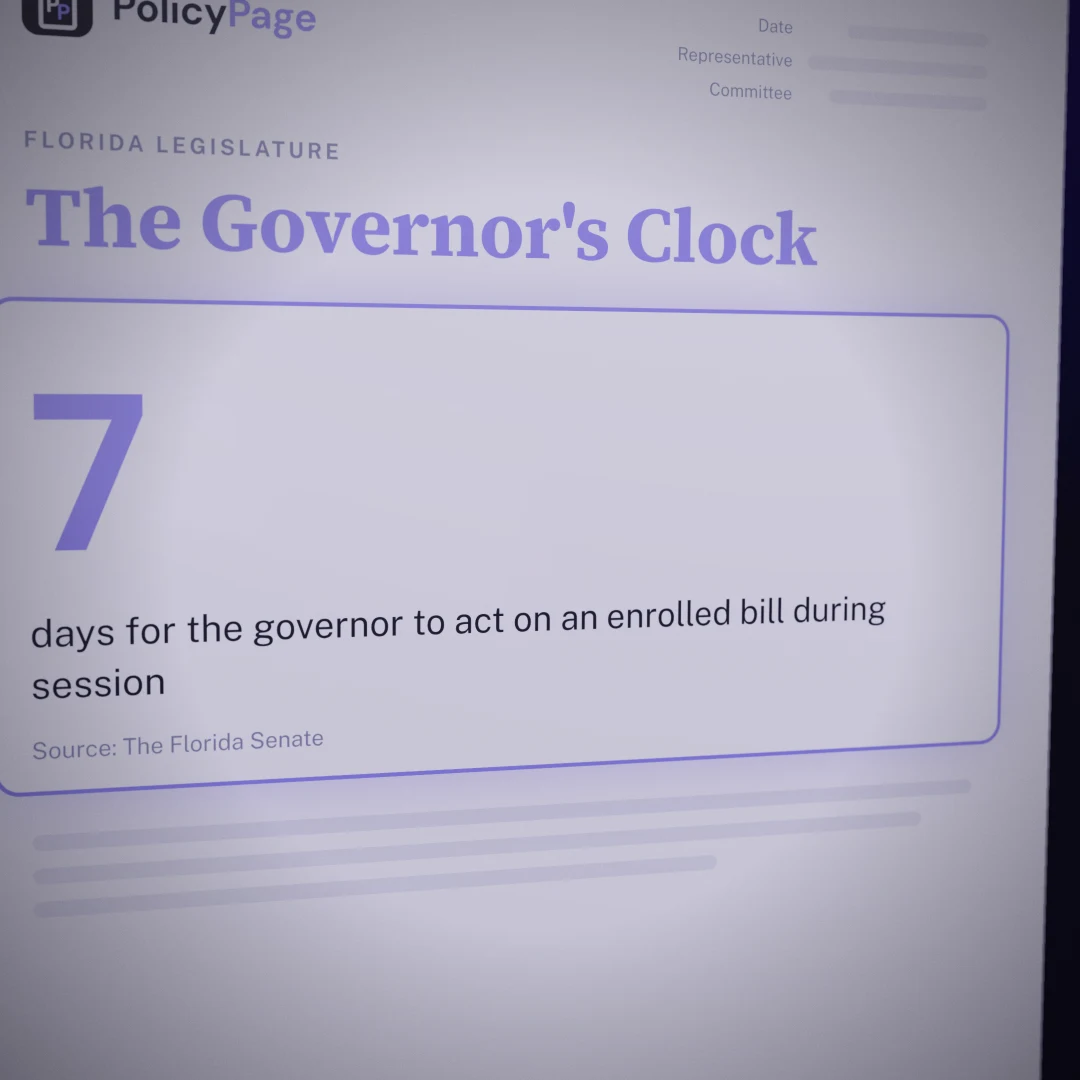
Then the governor's clock starts. The Florida Senate says that while the Legislature is in session, the Governor has 7 days to sign or veto an act after it is presented. If the Legislature adjourns sine die, meaning it ends its session, before the act is presented or while the governor has it, the governor has 15 days.
Other states show how the words can shift.
- Washington. The Washington State Legislature defines an engrossed bill as one that reflects all amendments made in the house of its origin. Its enrolled bill is passed by both houses and presented to the governor.
- Virginia. Virginia's Legislative Information System uses "engrossed" for a stage in the legislative process when a bill passes the second reading in its house of origin. An enrolled bill there has passed both the Senate and the House of Delegates, has been signed by their presiding officers, and has been sent to the governor.
So "enrolled" means about the same thing nearly everywhere: done with the legislature and headed to the executive. "Engrossed" is a little looser. It always signals progress inside one chamber, but the exact moment can vary by state.
How to tell which version of a bill you are reading
Most people meet these words on a bill's text page, not in a textbook. A single bill can have many versions, and each one has a label. GovInfo, the federal government's official publishing site, lists them with short codes. A few common ones:
- IH or IS: Introduced in the House or Senate. This is the text as formally presented by a member.
- EH: Engrossed in the House. GovInfo calls it the official copy as passed, including text as amended by floor action.
- ES: Engrossed in the Senate, certified by the Secretary of the Senate before it goes to the House.
- EAH or EAS: an engrossed amendment from the House or Senate, used when the second chamber replaces or amends the text.
- ENR: Enrolled. GovInfo describes it as the final official copy that both the House and the Senate have passed.
The differences between versions can be large. A committee can rewrite a bill during a markup, and the floor can change it again. A state may swap in a whole new text through a committee substitute. Our article on what a markup is explains how those committee changes happen.
Why the version matters before a meeting
If you are meeting a legislative office about a bill, the version you cite matters. Quoting a section from the introduced text when the engrossed text dropped it can cost you credibility in the first minute. Staff read the current version, and they will notice.
A few habits help.
- Check the label first. Before you quote a bill, look for the version code or label, such as EH, ES, ENR, or ER.
- Match your ask to the stage. If the bill is engrossed and waiting in the other chamber, your audience is that chamber. If it is enrolled, the legislature is finished and your audience is the President or governor.
- Note the date. Write down which version you read and when. Bills can be amended again within days.
When you are preparing to meet a member's office about a bill, it helps to bring one clear page instead of a stack of versions. PolicyPage writes a free, cited, one-page brief for the member you are meeting, so staff can see where the bill stands and what you are asking for.
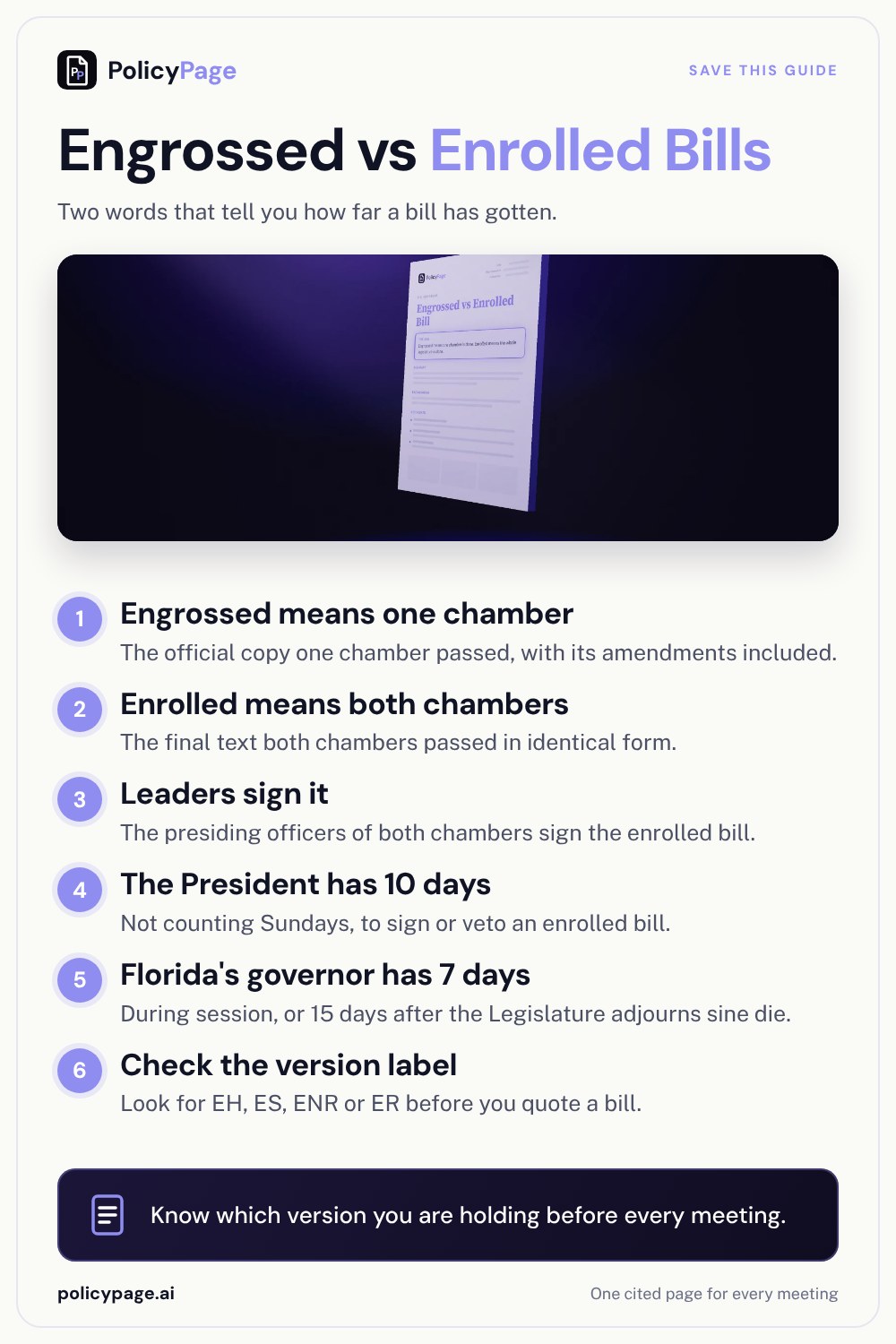
Save this guide
Frequently asked questions
What does an engrossed bill mean?
An engrossed bill is the official copy of a bill as one chamber passed it, with that chamber's amendments worked into the text. In Congress it is signed by the Clerk of the House or the Secretary of the Senate and sent to the other chamber.
What does it mean if a bill was enrolled?
An enrolled bill has passed both chambers in identical form and has been signed by their presiding officers. It is the final copy sent to the President or governor to sign or veto.
What is the difference between an engrossed and an enrolled bill?
An engrossed bill has passed one chamber. An enrolled bill has passed both chambers in the same form and is ready for the President or governor.
Is an engrossed bill a law?
No. An engrossed bill has passed only one chamber. It still needs the other chamber's approval, enrollment, and the signature of the President or governor, or a veto override.
Can a bill be engrossed more than once?
Yes. The Florida Senate notes that a bill may be engrossed more than once, and GovInfo lists engrossed amendment versions for when the second chamber changes a bill.
What is the enrolled bill rule?
It comes from the 1892 Supreme Court case Field v. Clark. Courts generally treat a signed, enrolled bill as proof of what the legislature passed, instead of checking the legislative record behind it.
How long does the governor of Florida have to act on an enrolled bill?
The Florida Senate says the governor has 7 days after an act is presented while the Legislature is in session. If the Legislature has adjourned sine die, the governor has 15 days.
What does ENR mean on a bill?
ENR is the GovInfo code for the enrolled version of a federal bill, the final official copy that both the House and the Senate have passed.
Terms in this article
Sources
- 1.Legislation: Engrossment, Enrollment, and Presentation (IF12855), Congressional Research Service, via EveryCRSReport
- 2.Enrollment of Legislation: Relevant Congressional Procedures (RL34480), updated September 23, 2026, Congressional Research Service, via EveryCRSReport
- 3.Engrossment, Enrollment, and Presentation of Legislation (98-826), Congressional Research Service, via EveryCRSReport
- 4.1 U.S. Code 106: Printing bills and joint resolutions, Legal Information Institute, Cornell Law School
- 5.1 U.S. Code 106a: Promulgation of laws, Legal Information Institute, Cornell Law School
- 6.Field v. Clark, 143 U.S. 649 (1892), U.S. Reports, via GovInfo
- 7.Congressional Bills: Bill Versions, GovInfo, U.S. Government Publishing Office
- 8.Laws, Office of the Federal Register, National Archives
- 9.About Public Laws, Office of the Federal Register, National Archives
- 10.Glossary, U.S. Senate
- 11.Frequently Asked Questions, The Florida Senate
- 12.Glossary, The Florida Senate
- 13.Secretary of the Senate: Responsibilities, The Florida Senate
- 14.Glossary of Legislative Terms, Washington State Legislature
- 15.Glossary, Virginia Legislative Information System
New to some of the terms here? The advocacy glossary defines them in plain English.