
What Is Suspension of the Rules? How the House Fast Track Works
Suspension of the rules is the House fast track: 40 minutes of debate, no floor amendments, and a two-thirds vote to pass. Here is how it works and why it matters.
10 minute read9 sources
In this article
- What does suspension of the rules mean?
- How does suspension of the rules work in the House?
- Who decides which bills come up under suspension?
- How common is suspension of the rules?
- What happens if a suspension vote fails?
- Suspend the rules in the Senate, state legislatures, and Robert's Rules
- Why suspension of the rules matters before a meeting
- Save this guide
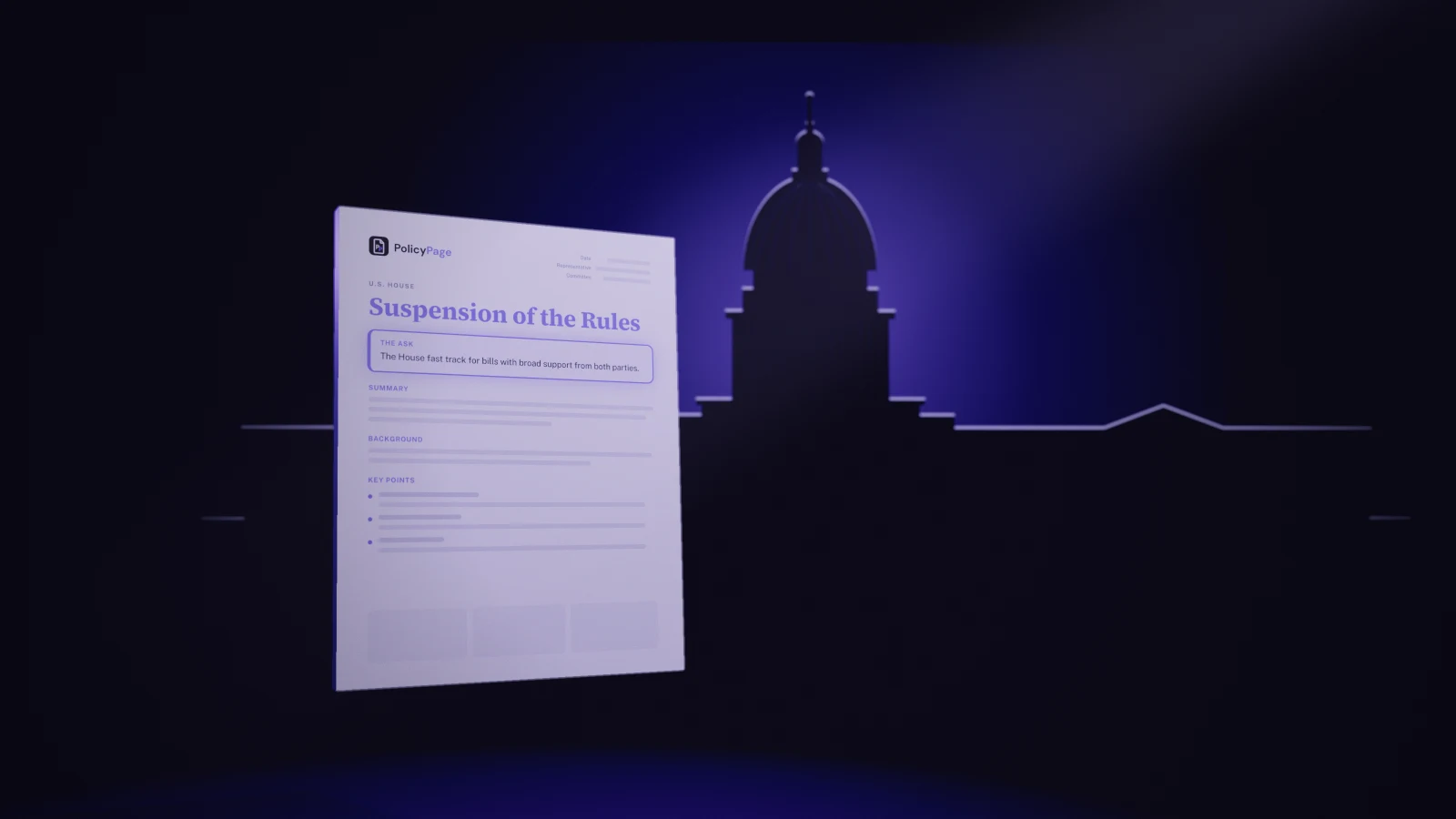
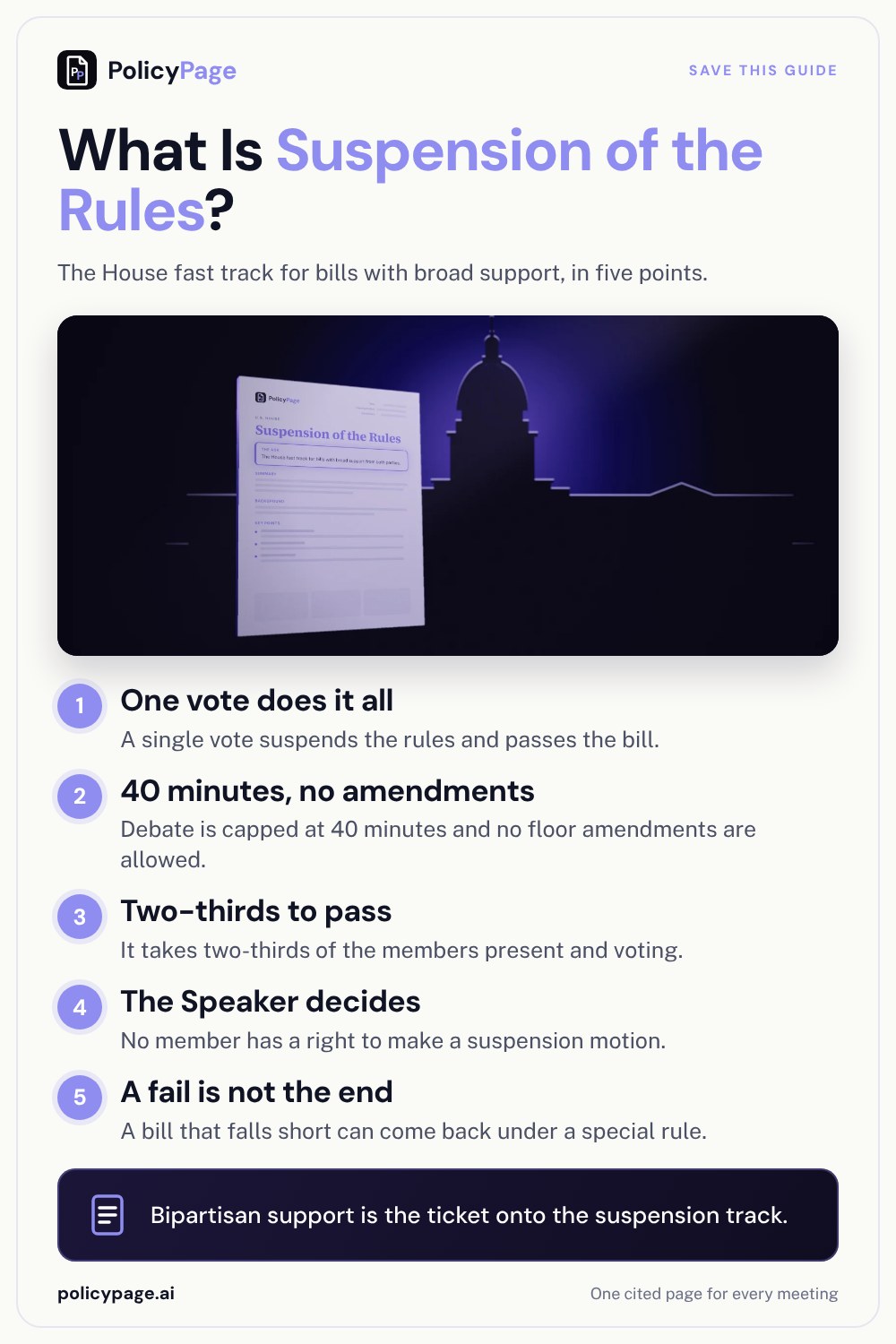
Suspension of the rules is a fast track the U.S. House of Representatives uses to pass bills that have broad support. A member moves to "suspend the rules and pass" a bill. Debate is capped at 40 minutes, no one can offer amendments from the floor, and the bill passes only if two-thirds of the members voting say yes. It trades debate and amendments for speed, so it works only for bills that both sides can live with.
Most people never hear the phrase, yet it is how the House handles most of its work. In the 2023 to 2024 Congress, two out of every three measures that reached the House floor came up this way. This guide explains what the phrase means, how the process works step by step, who decides which bills qualify, and how "suspend the rules" works in the Senate, in state legislatures, and under Robert's Rules of Order.
What does suspension of the rules mean?
To suspend the rules means to set aside the normal procedures for one specific bill so the chamber can act on it quickly. In the House, the authority comes from clause 1 of House Rule XV, according to the Congressional Research Service (CRS), the nonpartisan research office that writes reports for members of Congress.
To see why a shortcut is needed, it helps to know the normal path. For a typical bill, the House first passes a "rule," which is a short resolution that sets how much time will be allowed for debate and whether amendments can be offered, as the House's own explainer puts it. That rule is written by the Rules Committee, and the House has to vote on it before it can even start on the bill. For a big, contested bill, that process makes sense. For a bill that renames a federal building or fixes a typo in an old law, it is a lot of floor time for very little debate.
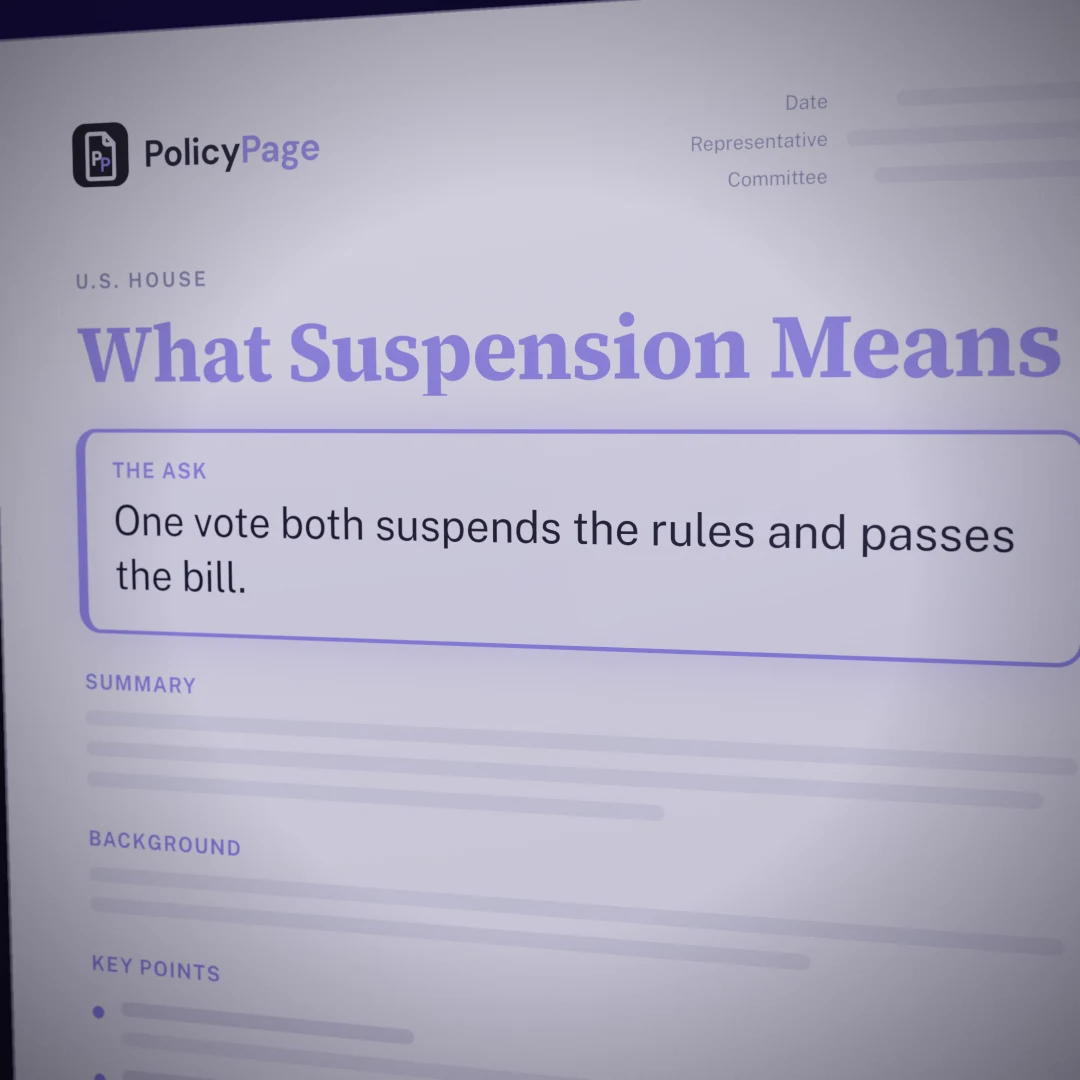
Suspension cuts that out. One motion does everything at once. CRS explains that a single vote both suspends the rules and passes the bill. There is no separate vote on a rule, no amendment process on the floor, and no long debate. Think of it as the express lane at the grocery store: it moves fast, but only if you have a short list.
What does "considered under suspension of the rules" mean?
When you read that a bill was "considered under suspension of the rules," it means the House took it up through this fast track instead of under a rule from the Rules Committee. You will often see the phrase on a bill's actions page, along with "on motion to suspend the rules and pass the bill." If the bill was changed before the vote, the motion is to suspend the rules and pass the bill "as amended." CRS notes that in that case the changes are written into the motion itself, and the House still takes only one vote on the whole package.
How does suspension of the rules work in the House?
The rules for suspension are short, and every part of them pushes in the same direction: fast, simple, and bipartisan. Here are the core features, all drawn from the CRS report on the principal features of suspension:
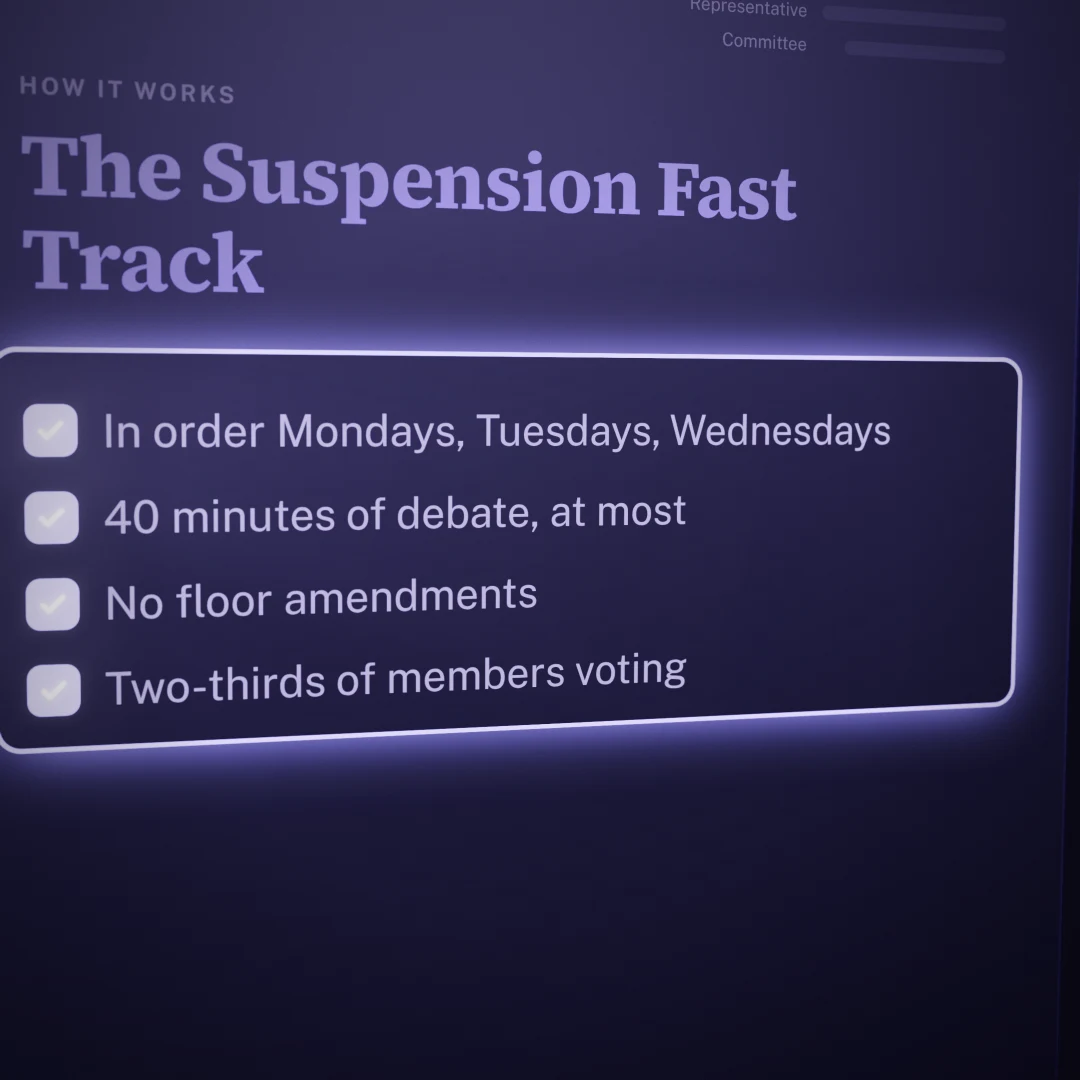
- Certain days only. Suspension motions are in order on Mondays, Tuesdays, and Wednesdays. The House can use them on other days, for example through a resolution from the Rules Committee.
- 40 minutes of debate, at most. The time is usually split between the chair and the ranking member of the committee that handles the bill. If the ranking member supports the bill, a member who opposes it can claim half the time.
- No floor amendments. Members cannot offer changes during debate. The bill is voted on exactly as written in the motion.
- A two-thirds vote. The motion passes only with the votes of two-thirds of the members present and voting, as long as a quorum is present.
- No committee report required. A bill does not have to be formally reported by a committee first, and points of order against it are waived.
Two-thirds is a high bar. Most House votes need only a simple majority, which is 218 of 435 members when every seat is filled and everyone votes. Under suspension, if all 435 members vote, a bill needs 290 yes votes. That is why suspension bills almost always have support from both parties. A bill that only one party backs usually cannot clear the bar.
The newer CRS report on House practice in the 118th Congress adds that suspension measures are not subject to a motion to recommit, a procedural vote that is normally available on bills considered under a rule.
Voice votes and postponed votes
Many suspension bills pass by voice vote, where members simply call out "aye" or "no" and the presiding officer judges which side is louder. When a recorded vote is requested instead, CRS explains, the Speaker can postpone the vote to later that day or to within the next two legislative days, and can group several of them together. The first vote in a cluster gets 15 minutes, and the ones after it usually get 5. That is why you may see the House debate a dozen suspension bills in the afternoon and then vote on all of them in a row in the evening.
Who decides which bills come up under suspension?
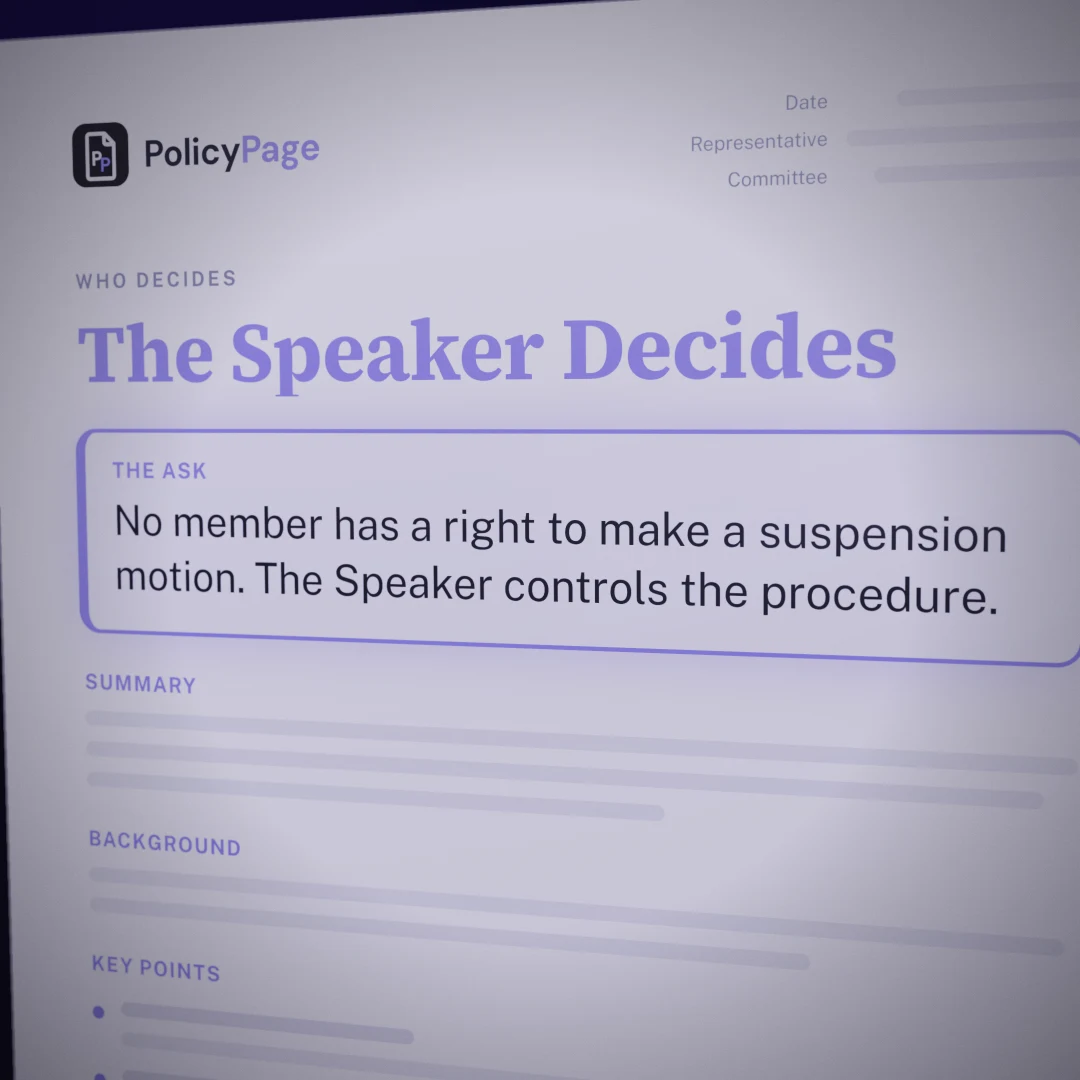
No member can bring up a bill under suspension on their own. CRS puts it plainly: the Speaker controls the use of this procedure, and no member has a right to make a suspension motion. In practice, the Speaker decides by choosing whom to recognize on the floor.
Selection usually starts in the committee that handles the bill. When the committee's leaders from both parties agree on a bill, they recommend it to the Speaker for the suspension track. The majority party's leadership then announces the next week's suspension bills, usually at the last session of each week. CRS notes there is no formal "suspension calendar." The weekly schedule is the list.
The majority party can also set its own internal limits. For the current Congress, the House Majority Leader's floor protocols list conference guidelines for suspension bills. For example, leadership will not schedule a bill under suspension if it lacks a cost estimate, or if its cost estimate is over $100 million and is not fully offset by spending cuts. The guidelines also rule out purely commemorative bills and require that bills be noticed to members at least 5 days before floor consideration. The page notes that a majority of the elected leadership can waive these limits. These are party scheduling guidelines, not House rules, and each majority writes its own.
For advocates, this matters a lot. A bill with strong support from both parties and the backing of its committee leaders has a realistic path to a quick vote. A bill without that support does not, no matter how good it is. Members who want a vote without leadership's help can try a discharge petition, which needs 218 signatures. If you are tracking who is counting the votes on a bill, our guide to what a whip does in Congress explains how leaders measure support before scheduling anything.
How common is suspension of the rules?
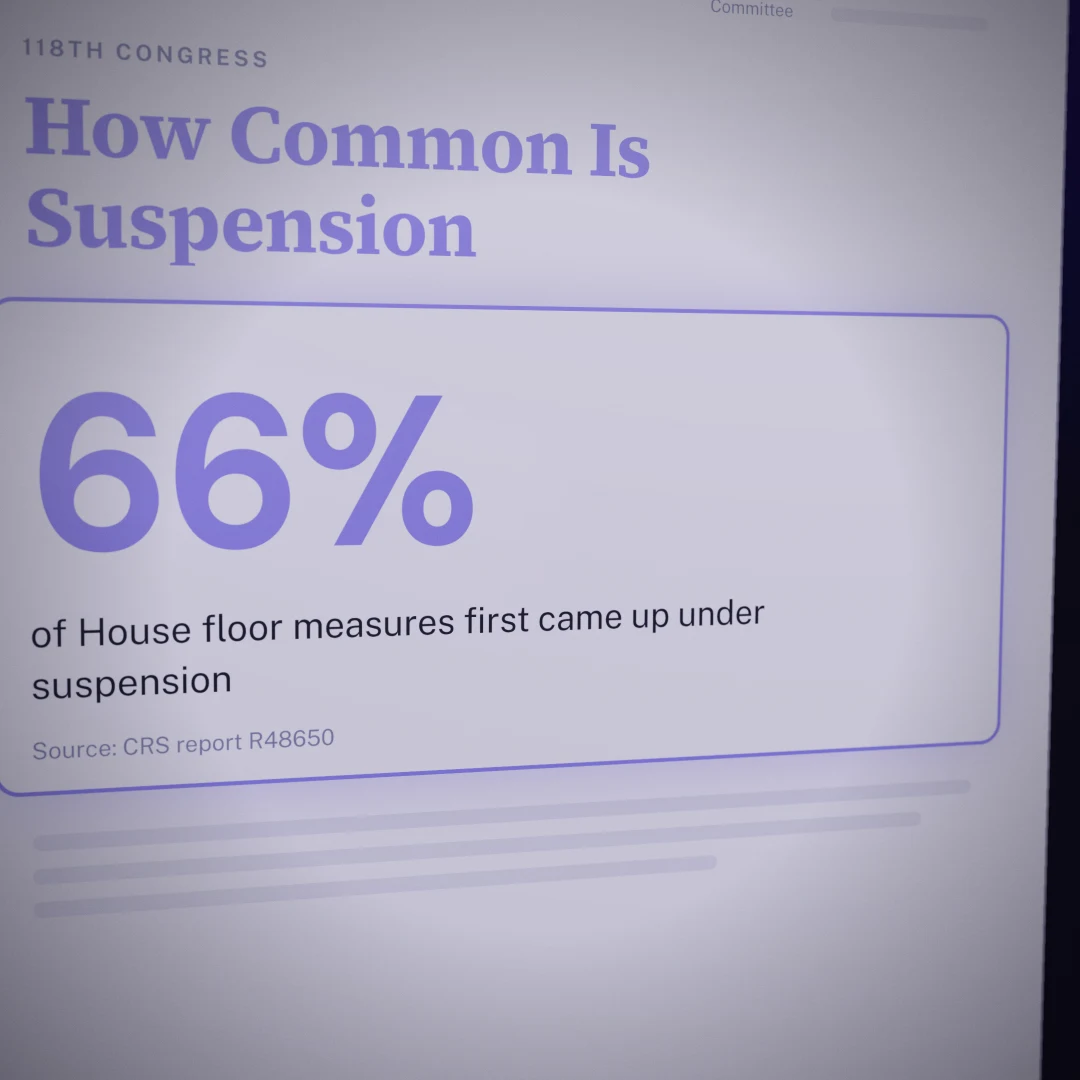
Very common. CRS counted every measure in the 118th Congress (2023 to 2024). Of the 1,032 measures that received action on the House floor, 681, or 66 percent, were first considered under suspension. By comparison, 16 percent came up under a special rule and 4 percent by unanimous consent.
A few more numbers from the same report show how routine the process is:
- Most pass. The House passed 673 of the 681 suspension measures. Eight failed.
- Most pass by voice. About 66 percent, or 447 measures, were agreed to by voice vote. The other 234 got a recorded vote.
- Many become law. 261 measures first considered under suspension in that Congress were signed into law.
- Debate is short. The average measure took about 12 minutes of floor time, and more than half took 10 minutes or less.
- Both parties use it. Members of the majority sponsored 69 percent of suspension measures, and members of the minority sponsored 31 percent.
What kinds of bills are they? CRS found the most common subject was government operations, such as designating federal facilities or changing administrative policies. These are the bills that keep government running without much argument.
It also helps to know that suspension does not mean a bill skipped review. CRS found that 86 percent of the suspension measures in the 118th Congress had been referred to a House committee, and 74 percent were ordered reported by one, often after a committee markup.
What happens if a suspension vote fails?
If a suspension motion falls short of two-thirds, the bill is not dead. CRS explains that the House can take it up again later, including under a special rule from the Rules Committee. Under a special rule, the bill needs only a simple majority to pass. In the 118th Congress, one measure that first failed under suspension later passed under a special rule.
That is why a failed suspension vote is sometimes a signal rather than an ending. It can show that a bill has majority support but not two-thirds support. Leaders then decide whether the bill is worth the floor time a rule requires. Our article on how a bill becomes law walks through the other paths a bill can take to the floor, including the discharge petition.
Suspend the rules in the Senate, state legislatures, and Robert's Rules
The phrase shows up well beyond the U.S. House, and the meaning shifts a little in each place.
The Senate. The Senate has its own rule on the subject, Rule V, but it works very differently. The Standing Rules of the Senate say a motion to suspend any rule needs one day's notice in writing that names the exact rule and the purpose. The same rule adds that any rule may be suspended without notice by unanimous consent. In daily practice, the Senate moves most routine business through unanimous consent, which the Senate's own glossary defines as agreement that sets aside a rule of procedure to speed things up. If any one senator objects, the request fails. That single-objection power is what makes a Senate hold effective, and our guide to how unanimous consent works covers it in detail.
State legislatures. State legislatures write their own procedures, and many have a way to set them aside. In Florida, for example, the Florida Senate's glossary uses the phrase "waive the rules," and notes that the normal requirement to read a bill on separate days may be waived by a two-thirds vote. Every state is different, so check the chamber's rulebook or glossary before you assume how it works there.
Robert's Rules of Order. Clubs, boards, city councils, and associations that follow Robert's Rules also have a motion to suspend the rules. It lets a group briefly set aside one of its procedural rules. The motions guide at RobertsRules.org lists the motion as needing a second, not debatable, not amendable, and requiring a two-thirds vote. The two-thirds idea is the same as in the House: a large majority can agree to bend the process for a moment, but a bare majority cannot.
Why suspension of the rules matters before a meeting
If you are meeting a congressional office about a bill, knowing whether it could move under suspension changes the conversation. A bill on the suspension track needs two things above all: support from both parties and agreement from the committee's chair and ranking member. That tells you what to ask for.
A few practical points help:
- Ask about cosponsors from both parties. A long, bipartisan cosponsor list is one of the clearest signs a bill could clear two-thirds.
- Know the committee's view. Since suspension bills usually start with agreement between the committee's leaders, the committee staff are often the people to persuade.
- Watch the weekly schedule. Suspension bills are announced shortly before the week they come up, so a bill can move quickly once it is listed.
- Mind the cost. Under the current majority's guidelines, a bill without a cost estimate, or one over $100 million without offsets, will not be scheduled under suspension unless leadership grants a waiver.
When you are getting ready to meet a member's office, one clear page beats a stack of handouts. PolicyPage writes a free, cited, one-page brief for the member you are meeting, so staff can see where your bill stands and what you are asking them to do.
Save this guide
Frequently asked questions
What does suspension of the rules mean?
It is a fast track the U.S. House uses for bills with broad support. Debate is limited to 40 minutes, no floor amendments are allowed, and the bill needs a two-thirds vote of the members present and voting to pass.
What does considered under suspension of the rules mean?
It means the House took the bill up through the suspension fast track instead of under a special rule from the Rules Committee. One vote both suspends the rules and passes the bill.
How many votes does suspension of the rules need?
Two-thirds of the members present and voting, with a quorum present. If all 435 members vote, that is 290 yes votes.
Who decides which bills come up under suspension?
The Speaker controls the procedure, and no member has a right to make a suspension motion. Bills are usually recommended by the committee's leaders from both parties and announced on the weekly floor schedule.
What happens if a suspension vote fails?
The bill is not dead. The House can bring it back later, including under a special rule, where it needs only a simple majority to pass.
Can the Senate suspend the rules?
Yes, but Senate Rule V requires one day's written notice naming the rule and the purpose. In practice the Senate sets rules aside through unanimous consent, which fails if any senator objects.
What vote does a motion to suspend the rules need under Robert's Rules?
A two-thirds vote. The motion needs a second and cannot be debated or amended.
Terms in this article
Sources
- 1.Suspension of the Rules in the House: Principal Features (98-314), updated January 6, 2025, Congressional Research Service, via EveryCRSReport
- 2.Suspension of the Rules: House Practice in the 118th Congress (2023-2024) (R48650), August 27, 2025, Congressional Research Service, via EveryCRSReport
- 3.119th Congress Floor Protocols, Office of the House Majority Leader
- 4.House Floor, U.S. House of Representatives
- 5.The Legislative Process, U.S. House of Representatives
- 6.Standing Rules of the Senate (Senate Document 117-9), U.S. Senate Committee on Rules and Administration
- 7.Glossary, U.S. Senate
- 8.Glossary, The Florida Senate
- 9.Robert's Rules of Order: Complete Motions Reference Guide, RobertsRules.org
New to some of the terms here? The advocacy glossary defines them in plain English.